Your behaviors can have a major impact on your sleep and can contribute to sleeplessness. Your actions during the day, and especially before bedtime, can make it difficult to fall asleep, stay asleep or get restful sleep.
Your daily routines – what you eat and drink, the medications you take, how you schedule your days and how you choose to spend your evenings – can significantly impact your quality of sleep. Even a few slight adjustments can, in some cases, mean the difference between sound sleep and a restless night.
The term “sleep hygiene” refers to a series of habits and rituals that can improve your ability to fall asleep and stay asleep. Board-certified sleep physicians recommend following a series of commonsense, healthy sleep habits to promote better sleep. These healthy sleep habits are a cornerstone of cognitive behavioral therapy (CBT), the most effective long-term treatment for patients with insomnia. CBT-I can help you address the detrimental thoughts and behaviors that are preventing you from sleeping. It also includes techniques for stress reduction, relaxation and sleep schedule management.
Sleep specialists recommend that you follow the healthy sleep habits that are highlighted in this article. If you have difficulty sleeping or want to improve your sleep, try following these sleep hygiene tips. If your sleep problem persists, the AASM recommends that you seek help from the sleep team at an AASM-accredited sleep center.
Quick Sleep Tips
Follow these tips to establish healthy sleep habits:
Keep a consistent sleep schedule. Get up at the same time every day, even on weekends or during vacations.
Set a bedtime that is early enough for you to get at least seven hours of sleep.
Don’t go to bed unless you are sleepy.
If you don’t fall asleep after 20 minutes, get out of bed.
Establish relaxing bedtime rituals.
Use your bed only for sleep and sex.
Make your bedroom quiet and relaxing. Keep the room at a comfortable, cool temperature.
Limit exposure to light in the evenings.
Don’t eat a large meal before bedtime. If you are hungry at night, eat a light, healthy snack.
Exercise regularly and maintain a healthy diet.
Avoid consuming caffeine in the late afternoon or evening.
Learn about the treatment options available at Bon Secours Sleep Disorder Centers. Our sleep specialists and experts on the treatment and care of sleep disorders help patients suffering from many sleep disorders, including snoring problems, apnea, insomnia, restless leg syndrome and narcolepsy.
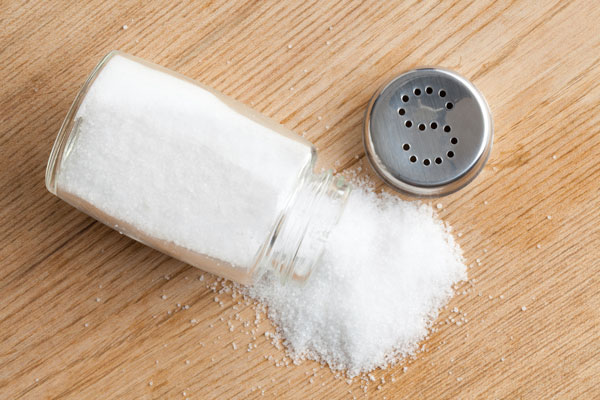
Nearly all Americans are consuming more sodium than they should, according to a new federal report.
More than 90 percent of children and 89 percent of adults eat more than 2,300 mg of sodium per day–the recommended limit set in the most recent dietary guidelines for Americans. Excess sodium in a person’s diet has been linked to high blood pressure and other health problems, according to the Centers for Disease Control and Prevention.
“The finding that nine of ten adults and children still consume too much salt is alarming,” said CDC Director Tom Frieden, M.D., MPH. “The evidence is clear. Too much sodium in our foods leads to high blood pressure, a major risk factor for heart disease and stroke. Reducing sodium in manufactured and restaurant foods will give consumers more choice and save lives.”
Controlling sodium intake is an important health issue nationwide.
About one in three U.S. adults–roughly 70 million people–have high blood pressure, but only half have it under control. Heart disease, stroke, and other cardiovascular diseases kill more than 800,000 Americans each year and cost nearly $320 billion a year in health care and lost productivity, a CDC news release states.
CDC researchers came up with the recent sodium findings by analyzing dietary data from a survey of nearly 15,000 people. One troubling finding is that sodium consumption is high among those who are at risk of heart disease.
Although researchers say excess sodium intake is a problem for all Americans regardless of age, race, gender and whether they have high blood pressure, some differences were found in the study:
Among adults, a larger percentage of men (98 percent) than women (80 percent) consume too much sodium.
About 90 percent of adult whites consume excess sodium compared with 85 percent of blacks.
Estimated sodium and calorie consumption peaks between the ages of 19 and 50.
Among people at greater risk of developing heart disease or stroke – such as people age 51 and older, African Americans and individuals with high blood pressure or pre-hypertension (blood pressure higher than normal but not in the “high” range) – more than three out of four exceed 2,300 mg per day.
Adults with hypertension consume slightly less sodium than other adults, and may be trying to follow physicians’ advice to reduce sodium. However, 86 percent of adults with hypertension still consume too much.
Despite evidence and public health campaigns to educate people about the link between sodium and health problems, sodium consumption has not changed much over the past 10 years.
Federal health officials say a key strategy for lowering the amount of sodium in the public’s diet is to gradually reduce sodium in the food supply. More than three-quarters of sodium in the American diet is estimated to come from processed and restaurant food, which gives consumers little choice when it comes to lowering daily intake. While some food companies have begun to voluntarily reduce sodium in their products, others are being encouraged to take similar steps, the news release states.
The recent federal report also highlights the important role healthcare professionals can play in advising patients on how to limit salt in the diet.
“Sodium reduction is a key part of preventing heart disease and stroke,” said Sandra Jackson, an author of the report and an epidemiologist in CDC’s Division for Heart Disease and Stroke Prevention. “Reducing sodium is an achievable and effective strategy to improve heart health for everyone, but it’s going to take all of us working together to make it possible.”
A few weeks ago, Bon Secours Health System launched Bon Secours 24/7, our first foray into telehealth. Bon Secours is the first health system in Richmond to make our physicians and nurse practitioners available for patient visits via mobile or tablet devices, using the Bon Secours 24/7 app, or by logging in to a secure website from a desktop computer.
The 24/7 app is available for Apple and Android devices and can be downloaded for free from the App Store or Google Play.
This innovative service is now available for the entire community, giving people access to Bon Secours Medical Group providers 24 hours a day, 365 days a year. No appointment is needed. These virtual visits allow users to use an app to connect within minutes to a Bon Secours medical provider. Our partner in this endeavor is American Well, a national leader in telehealth software and services. With Bon Secours 24/7, you have access to live video visits with secure messaging features, board-certified physicians, licensed physician assistants and certified nurse practitioners. Providers also may offer expert preventive care advice and are able to recommend tests and immunizations like flu shots, mammograms and other tests.
Bon Secours 24/7 is great for people of all ages—stay-at-home moms who want to contact a physician for themselves or their children; seniors who may not want to travel to a physician appointment or are unable to leave the house; and busy professionals who need convenient care at their fingertips. Patient visits are $49.
As a health system, we recognize that people are increasingly more engaged in their own health care and seek convenience, affordability and reliability. A telehealth platform for non-urgent office visits is an essential step in meeting these expectations.
Bon Secours Richmond Health System is an active participant in the activities of the American Heart Association (AHA), particularly the Richmond and Mid-Atlantic chapters. Each February, during American Heart Month, the AHA and Bon Secours join forces to raise awareness about the dangers and signs of heart disease, as well as methods of prevention.
Heart disease is the leading cause of death in the United States, and globally, killing more than 375,000 Americans each year. For women, heart disease takes more lives than all forms of cancer combined.
We hope you wore red on Friday, February 5, to honor the AHA’s designated “Wear Red Day,” highlighting the significance of heart disease in our lives. Bon Secours, along with hundreds of national organizations, participated in this effort.
Also, this month the Bon Secours Heart & Vascular Institute is challenging all of Richmond to take the first step toward heart health through self-awareness, education, prevention and early diagnosis. The Bon Secours Heart Check Challenge offers three easy opportunities to assess your risk of heart disease, as well as opportunities to understand and lower your risk. By visiting heartcheckrva.com and taking one, or all three, of the actions below, you will be one step closer to lessening your risk of heart disease, and will be eligible for a number of heart-healthy prizes.
Take a free online HeartAware Assessment
Schedule a Heart Scan ($99 special in February)
Register for a free heart screening
It’s important to know your risk and make positive lifestyle changes so you don’t become a statistic. Let’s keep RVA beating strong!
Toni R. Ardabell, CEO, Bon Secours Richmond Health System
Marc R. Katz, M.D., MPH, Chief Medical Officer, Bon Secours Heart & Vascular Institute
No matter how hard you try, at some point in your life, you are bound to experience back, knee or shoulder pain of some kind. In fact, surveys have shown that chronic low back pain is the leading cause of disability and missed work in the U.S. Joints are just like the brakes on a car; at some point they are going to experience some wear, and in some cases need replacing. Unfortunately for us it is a lot harder to replace a knee than it is a brake pad. However, there is a bit of good news! Below are some things you can do to help prevent these types of injuries from occurring.
Exercise! Exercise plays a pivotal role in preventing all kinds of injuries. A proper exercise regimen will include proper strength training practicing proper movements, core strength/stability, and flexibility as well as a cardiovascular component. Exercise will help strengthen the entire body and keep joints healthy and moving properly. If you exercise regularly, you are more likely to understand proper lifting mechanics and its importance in everyday life, such as moving furniture or picking something up from the ground. Flexibility is going to help muscles maintain their elastic properties and prevent extreme tightness.
Maintain a healthy body weight! Maintaining a healthy body weight will also help in prevention of injuries. Carrying around excess body weight can place a lot of unnecessary wear and tear on your joints. Don’t believe me? Imagine filling a book bag with a 30-pound sandbag and wearing it backwards all day. Your lower back will not be pleased.
Posture! Practicing proper posture can help prevent all kinds of injuries to hips, back, shoulders, knees – you name it. This will be important for all you desk jockeys out there. Your body is like a machine; it is going to sacrifice quality of movement to maintain quantity. So something as small as slouching at your desk all day can wreak havoc on your body’s ideal mechanics when walking or doing other activities. Sitting all day can cause your hips to tighten up, which could cause your hips to become misaligned, ultimately leading to lower back tightness. Your shoulders can also become stiff and lead to shoulder injuries in the future. Your body will not let this alignment issue stop it from carrying on, so it is going to compensate and shift stress to the wrong areas to keep moving. In the long run, this could lead to serious musculoskeletal problems.
Exercise can play an important role in preventing injuries and chronic pains. It can also help someone maintain a healthy body weight and contribute to the prevention of injuries. If you work at a desk or your job requires you to sit all day, take frequent breaks just to stand up, take a quick lap down the hall, and do some quick stretches to keep you from becoming stiff. These three things are great not only for helping prevent injuries, but also for overall health and well-being!